
College as we have known it in our lifetimes has been organized around disciplines and departments, with professors still mostly trained to lead from their discipline. But, says President John Volin, “truly student-centered learning starts with the lived experience of the student.” Professors today, “aren’t just delivering content. They’re helping students learn how to think, not what to think. And students need to know they matter through all of it.”
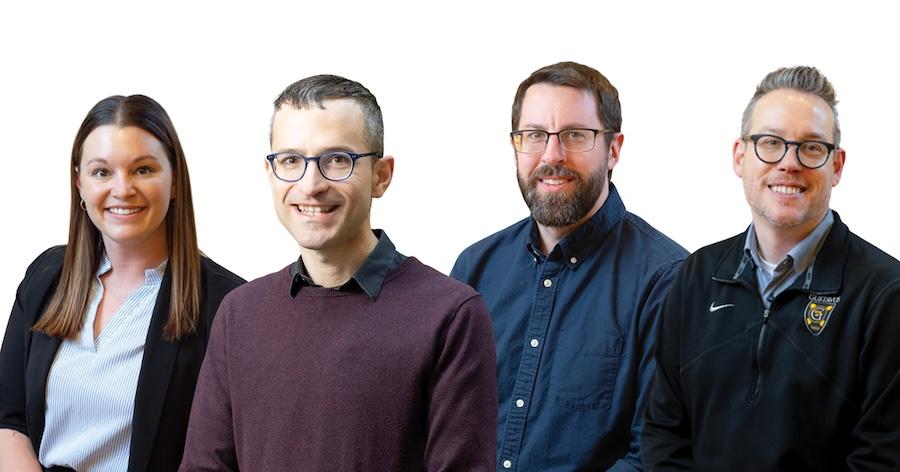
As Dave Stamps, assistant provost of faculty development and support, says “The professor is no longer ‘the keeper of all the knowledge.’” (That distinction belongs to your phone.) Today, the professor is a utility player across multiple roles: guide, facilitator, challenger, mentor, and champion.
Alumni readers no doubt remember their own favorite professors leading discussion-based classes, shaping group projects, and asking more of them. Today, these modes of relatedness carry even greater importance. “We are in a crisis of disconnection,” says Patrick Heath, professor of pyschological science and the lead of a cross-campus group charged with flourising community.
“Learning to navigate discomfort is a necessity. Our faculty help students be okay with being uncomfortable.”
—Dave Stamps, assistant provost of faculty development and support
Community has always been core to Gustavus. Now, Heath says, “it’s an incredibly important thing to lean into. The more we can teach students to work together, the better we can help solve divides that exist in the world.” Renovations to some of Jackson Campus Center’s spaces are on the list to juice connection, as well as more support for mental health and the ways students drive community themselves. “We don’t want people to feel siloed.”
It’s always been hard to be siloed as a Gustavus professor, says Darío Sánchez González, professor in the Modern Languages, Literatures, and Cultures department as well as the Gender, Women, and Sexuality program. “You really do have a lot of academic freedom, with its possibilities and consequences. You have to bring your real self to class.”
Finding that real self is some of the most important work students do at Gustavus. “I tell them the target [outcome] of your education is not your salary. You are the target—your neural networks, your synapses, your own little machine inside your head,” says González. Google Translate may do a better job technically at a translation, but it’s not language acquisition. “You wouldn’t let an AI-powered robot train you at tennis,” he says. His classrooms require personal perspectives and authenticity. “You don’t have an opinion? You don’t have it yet. You will. And you need to be comfortable with your opinion not being the only one.”
Pushing students to bring their whole selves to the work in college pays off in life. Take, for instance, nursing. “Being able to work with all different populations is not easy,” says nursing professor Jessica Pelzel Helget ’11. “Gusties are known as knowledgeable and good communicators, able to work with different types of patients and providers.” As the traditional doctor-nurse-patient hierachies moved to care team models, Gustie nurses thrived. “They are confident advocates. They see what’s happening with the patients when they’re most vulnerable. They think beyond the here and now and into a patient’s home, their discharge plan, the impact of their diagnosis. They think through to the next thing,” she says.
“As long as there are humans in the loop, we will need problem solvers who can help humanity through any change,” says professor Stamps. “Jobs are coming up we don’t even know about yet. They’re going to live in the cracks of current career paths.” The promise of Gustavus liberal arts is that students will leave ready to work effectively in those cracks, and be well—maybe even great—while doing it.